2026 Global Outlook: For security companies, three major forces are converging to reshape the residential security landscape—video-first ecosystems, smart lock platforms, and on-device AI detection. Think of the modern home as a dynamic network: cameras monitor in real-time, locks make real-time decisions, and AI provides real-time interpretation. The result: fewer false alarms, faster event processing, and a smoother user experience.
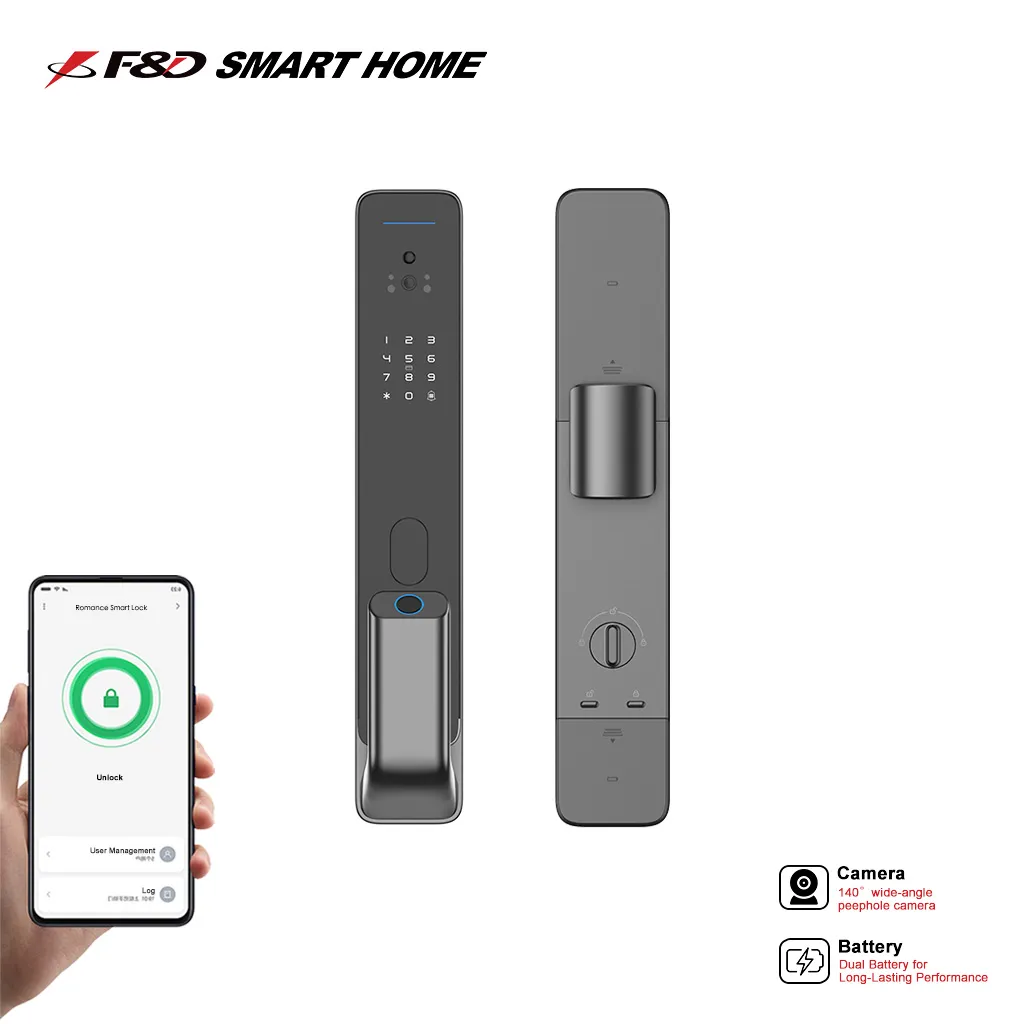
The key for 2026 lies in interoperability and trust. Standards such as Matter, security baselines like ETSI EN 303 645 and NISTIR 8259A, and video interoperability from ONVIF Profile M are accelerating reliable integration—which is exactly where leading OEM/ODM partners can stand out.
Deep Dive: Defining the Three Major Trends of 2026
Video-First Security Ecosystems
Definition and Current Status: Residential surveillance systems are shifting from "record everything" to event-driven, metadata-standardized video monitoring. Cameras are transforming from simple sensors into analytical terminals.
Drivers:
- Interoperability: ONVIF Profile M standardizes video analytics metadata to enable cross-vendor integration.
- Edge Computing: Efficient SoCs enable on-device inference, reducing bandwidth and latency.
- Ecosystem Orchestration: Matter supports multi-device orchestration for consumer IoT.
Data Support: ONVIF’s Profile M (designed to enhance analytics interoperability) supports consistent metadata streams and event processing across suppliers; see ONVIF. Gartner Research highlights standardized comparisons and market dynamics through Hype Cycles and Magic Quadrants.
Impact on the Value Chain:
- Suppliers: Camera module and SoC vendors must support analytics-ready pipelines.
- Production: Enhanced quality assurance for firmware stability and metadata fidelity.
- Distribution: Bundled packages emphasize interoperability guarantees.
- Consumers: Faster alerts, higher accuracy, and simpler multi-brand setups.
Smart Door Locks as Security Hubs
Definition and Current Status: Smart lock platforms integrate identity information, access schedules, video snapshots, and event workflows. The door lock becomes the coordinator of entry/exit events.
Drivers:
- Identity-First Access: Secure credential management and multi-factor authentication.
- Interoperability: Matter consolidates locks, cameras, and sensors into a unified application layer.
- Security Baselines: ETSI EN 303 645 and NISTIR 8259A define consumer IoT requirements (e.g., vulnerability handling, secure updates, data protection).
Data Support: ETSI EN 303 645 (aimed at guiding consumer IoT security) and NISTIR 8259A (final version) establish device security baselines widely cited by the industry; see related materials from ETSI and NIST. Gartner provides tools for vendor and capability assessments; see Gartner Research.
Impact on the Value Chain:
- Suppliers: Convergence of mechatronics, biometrics, and cryptographic components.
- Production: Secure provisioning and large-scale key management become core competencies.
- Distribution: Value shifts toward service packages (installation, credential lifecycle).
- Consumers: Door events trigger contextual actions—video snapshots, porch lights, and alarms.
On-Device AI Detection and Contextual Automation
Definition and Current Stage: Models classify people, packages, and vehicles, then trigger context-aware routines (locking, notification, recording) with privacy-preserving edge processing.
Drivers:
- Operational Scaling: Organizations prioritize responsible AI deployment; see McKinsey.
- Market Guidance: Hype cycles and benchmarks guide adoption phases; see Gartner.
- Privacy and Compliance: Edge inference reduces data transmission and leakage.
Data Support: McKinsey’s global AI survey tracks adoption trends across corporate functions; see McKinsey. Standard bodies (ETSI, NIST) provide assurance for secure consumer IoT deployment; see ETSI and NIST.
Impact on the Value Chain:
- Suppliers: Model optimization (quantization, distillation) becomes standard.
- Production: Firmware CI/CD and secure update pipelines are mandatory.
- Distribution: Differentiation through verified analytics performance and privacy.
- Consumers: Fewer false alarms, richer contextual information, easier automation.
2026 Data-Driven Outlook (Global)
Mainstream, interoperable software packages combining video analytics with smart lock control are expected to emerge. The adoption of standards will bring a consistent user experience, while edge AI enhances responsiveness and privacy protection. Quantitative results vary by region and supplier; refer to the following resources for specific market information.
| Capability | Adoption Path (2026) | Enabling Standards | Common Use Cases | Source |
|---|---|---|---|---|
| Event-Driven Video | Mainstream | ONVIF Profile M | Utilizing snapshots for package/visitor detection | ONVIF |
| Lock-Centric Orchestration | Early Majority | Matter, ETSI EN 303 645, NISTIR 8259A | Authorized entry + camera tracking | CSA; ETSI; NIST |
| On-Device AI Detection | At Scale | Vendor Model Governance; ETSI/NIST Baselines | Person/Vehicle classification, privacy-aware alerts | McKinsey |
Opportunities and Challenges
Opportunities for Security Companies:
- Integrated Suites: Pairing cameras, smart locks, and AI services with clear declarations of interoperability.
- Service Revenue: Credential lifecycle management, firmware security maintenance, and analytics tuning.
- Privacy-First Differentiation: Edge inference and transparent data policies.
- OEM/ODM Acceleration: Co-developing standard-compliant products through rapid iteration.
Challenges to Address:
- Model Governance: Bias, drift, and update cadence.
- Security Configuration: Key management and vulnerability handling in accordance with ETSI/NIST standards.
- Interoperability Quality Assurance: Multi-brand testing across Matter and ONVIF.
- Regulatory Alignment: Regional privacy/data laws affecting cloud workflows.
Playbook (Role-Based)
For CEOs and Strategic Leaders
- Commit to Interoperability: Require all product portfolios to comply with ONVIF/Matter standards.
- Invest in Edge AI: Prioritize System-on-Chip (SoC) platforms and MLOps for on-device models.
- Build Trust: Adopt ETSI EN 303 645 and NISTIR 8259A security baselines.
For Product and Engineering Managers
- Design for Activity: Optimize camera metadata and workflow locking.
- Secure Update Pipelines: Establish SBOM, signing, and phased rollouts.
- Test Interoperability: Continuous validation across Matter, ONVIF, and mobile platforms.
For General Audience (Partners, Integrators)
- Select devices with clear standards support and privacy protection features.
- Align installations with credential management best practices.
- Measure outcome quality: Reduced false alarms and resolution time.
Realizing Value with Shenzhen Fenda Smart Home Co., Ltd.
With 30 years of precision manufacturing experience, over 900 smart lock patents, and ISO-compliant operation systems, Shenzhen Fenda Smart Home Co., Ltd. is dedicated to accelerating end-to-end solutions covering audio, health, smart locks, and home automation. With factories worldwide (China and Vietnam), high first-pass yield rates, and OEM/ODM services, Fenda empowers partners to deliver interoperable, secure, and scalable products.
To align these trends with your roadmap, please book a consultation or request a proposal for a standard-compliant solution path.
References
- Gartner: Market guidance through Hype Cycles and comparative tools; Gartner Research
- McKinsey: Global AI adoption insights and enterprise scaling patterns; The State of AI in 2024
- CSA (Matter): Interoperability framework for consumer IoT; Matter Overview
- ETSI EN 303 645: Cyber Security for Consumer Internet of Things baseline requirements; Standards Page
- NISTIR 8259A: IoT Device Cybersecurity Capability Core Baseline; Final Version
- ONVIF Profile M: Metadata Interoperability for Analytics in IP Video; Profile M