 -
-
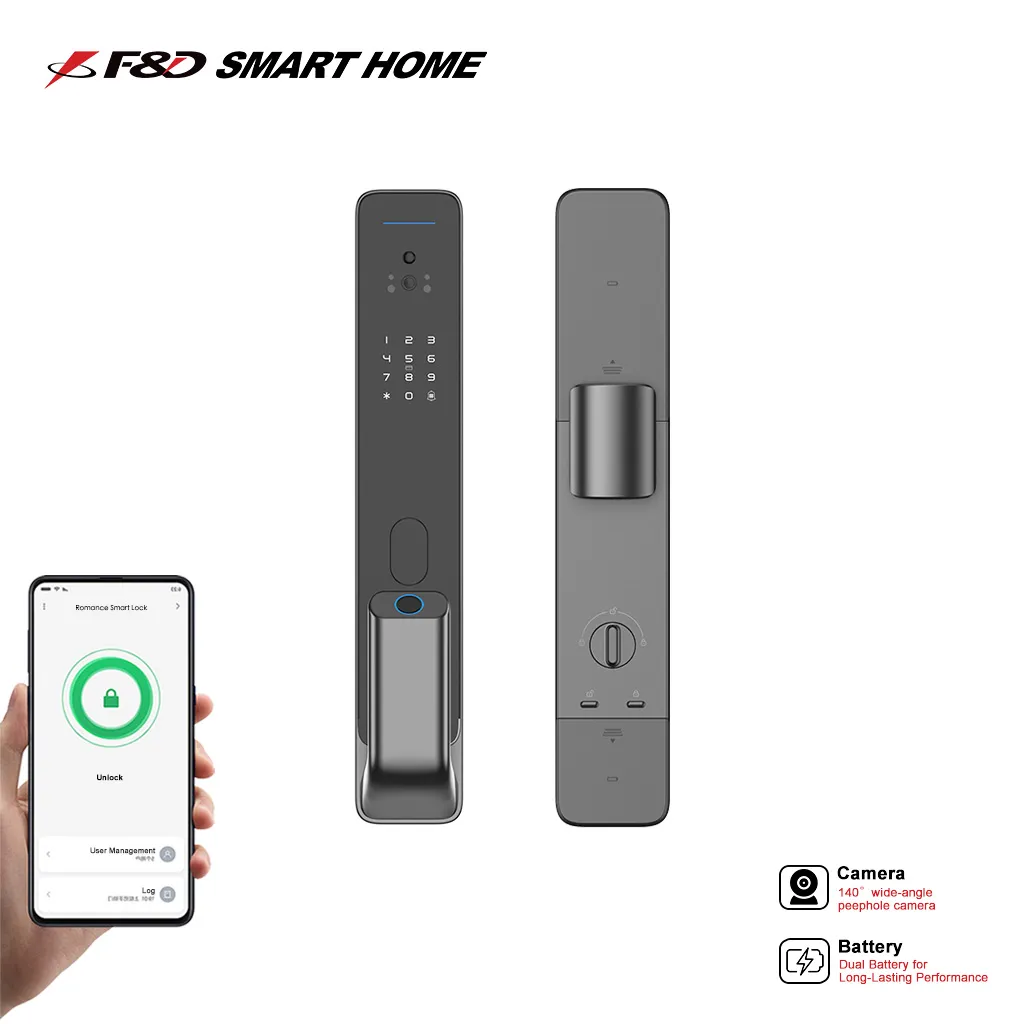
2025, global. For security companies, AI is now the force multiplier across home automation—from the Digital Door Lock at the edge to privacy-preserving analytics that run locally. This article delivers a practical, research-backed playbook to help security providers turn AI into revenue, resilience, and reliable user experience—grounded in standards and credible market data.
We focus strictly on AI in home automation for 2025, addressing the priorities of security companies: faster detection, safer identity, interoperable control, and OEM/ODM pathways to scale.
Focused AI Playbook for Security Companies
Edge AI for Access Control
Definition & status: On-device models embedded in locks, hubs, and sensors enable instant decisions (e.g., anomalous unlock attempts, tamper signals) without streaming raw video or credentials to the cloud. This strengthens privacy and latency for Digital Door Lock scenarios.
Drivers: Privacy-by-design, battery efficiency, and on-device silicon; adoption of secure enclaves and encrypted local storage.
Data support: The global smart lock market is valued at USD 3.23B in 2025, forecast to USD 6.61B in 2030 (15.40% CAGR). Grand View Research reports deadbolts held over 42% revenue share in 2024, continuing to dominate. For technology selection, Gartner highlights frameworks like Hype Cycle and Magic Quadrant to compare vendors and maturity.
Impact on value chain: Suppliers prioritize AI-capable MCUs; manufacturers integrate secure boot and model update pipelines; distributors differentiate with privacy-preserving features; homeowners gain faster, offline decisions.
Vision AI & Behavioral Analytics
Definition & status: Lightweight vision and pattern models detect tailgating, forced-entry signatures, or unusual access sequences; multi-modal signals (lock events + presence + audio triggers) reduce false alarms and elevate context.
Drivers: Real-time detection needs, multi-sensor fusion, and support for short-term rentals and multi-family properties where access patterns are dynamic.
Data support: Security governance is anchored in NIST AI RMF 1.0 for trustworthy AI, ISO/IEC 27001 for information security, and Bluetooth security features for encrypted connectivity on locks and hubs.
Impact on value chain: Hardware vendors add secure accelerators; integrators deploy federated-learning pipelines; monitoring services repackage analytics as premium tiers for enterprises and rental operators.
AI-Orchestrated Interoperability (Matter + Identity)
Definition & status: AI policies coordinate locks, lighting, and sensors via Matter scenes; identity-aware automation personalizes access while minimizing friction.
Drivers: Cross-brand compatibility, reduced vendor lock-in, and standardized commissioning.
Data support: The Connectivity Standards Alliance’s Matter streamlines secure device onboarding and control; Mordor Intelligence notes North America’s leadership (2024) and Asia-Pacific’s rapid growth trajectory, aligning with multi-ecosystem deployments.
Impact on value chain: OEMs certify Matter; installers reduce setup time; consumers gain unified scenes; security firms upsell orchestration bundles with compliance controls.
Data-Driven Outlook (2025)
 -
-
Market growth for AI-enhanced home access is strong globally. To visualize the expected trajectory (single-source view), the chart below uses cited data from Mordor Intelligence.
Comparative perspectives from other firms align with strong expansion: Grand View Research cites USD 3.306B (2025) and USD 8.137B (2030), while Coherent Market Insights highlights USD 3.16B (2025) and USD 10.43B (2032). Security companies should plan for variance by region, channel, and product type (deadbolt, lever, padlock, biometrics).
| Layer | Key Standard / Guidance | Purpose |
|---|---|---|
| Device & Identity | CSA Matter | Unified commissioning, secure transport, cross-brand scenes |
| Security | ISO/IEC 27001 | Information security management system for data and operations |
| AI Governance | NIST AI RMF 1.0 | Risk-based AI development, measurement, and monitoring |
| Connectivity | Bluetooth Security | Encrypted pairing and transport for locks, sensors, hubs |
| Market Insight | Gartner Research | Vendor comparison, maturity maps, decision frameworks |
Opportunities & Challenges
Opportunities: Premium AI features (privacy-preserving vision), subscription analytics bundles, Matter-ready retrofits for Digital Door Lock, and OEM/ODM acceleration to enter new segments quickly.
Challenges: Model drift and false positives, secure over-the-air model updates, multi-ecosystem compatibility, and compliance across regions. Use NIST AI RMF and ISO/IEC 27001 to structure mitigation, and leverage Gartner frameworks for vendor selection.
Practical Action Guide (Role-Based)
- Strategic Decision-Makers (CEO/GM): Fund edge-AI pilots on locks/hubs; require Matter certification; establish AI governance using NIST AI RMF; measure attach rate uplift and churn reduction.
- Managers (Product/Engineering/Operations): Choose MCUs with secure enclaves; implement encrypted local logs; define model update cadence; integrate ISO/IEC 27001 controls; run A/B tests for alert precision.
- General Audience (BizDev/Channel): Position privacy-first analytics; highlight retrofit-friendly options; explain standards (Matter, Bluetooth security) in simple terms; bundle installation + monitoring.
Value Realization Path
SHENZHEN FENDA SLIM HOME CO.,Ltd brings 30+ years of precision manufacturing, 136+ smart lock patents, a 98% first-pass yield, and multi-facility capacity exceeding 5M units annually—backed by global standards compliance (e.g., ISO 45001). With expertise in acoustics, wireless, software, and precision engineering, FENDA’s OEM/ODM services help security companies co-design AI-ready hardware and firmware that meet privacy, reliability, and cost targets.
To explore a tailored roadmap—edge-AI lock designs, Matter certification, and secured model update pipelines—request an expert consultation or start an inquiry. Partnerships with leading ecosystems (e.g., Amazon, Logitech, Alibaba) reinforce integration quality for real-world deployments.
References
- Research Firms: Mordor Intelligence (2025 = USD 3.23B; 2030 = USD 6.61B; 15.40% CAGR); Grand View Research (2025 and 2030 forecasts, deadbolt share); Coherent Market Insights (2025 = USD 3.16B; 2032 = USD 10.43B; 18.6% CAGR).
- Standards & Security: Connectivity Standards Alliance – Matter; ISO/IEC 27001; NIST AI RMF 1.0; Bluetooth Security.
- Decision Frameworks: Gartner Research (objective insights, Hype Cycle, Magic Quadrant for vendor and maturity assessment).